Dubai 2030: how the city became the world's leadership talent magnet.
The shift from regional hub to global leadership capital was not an accident. A close look at the policies, the capital flows and the cultural signals that pulled global CXOs to the UAE — and what comes next.
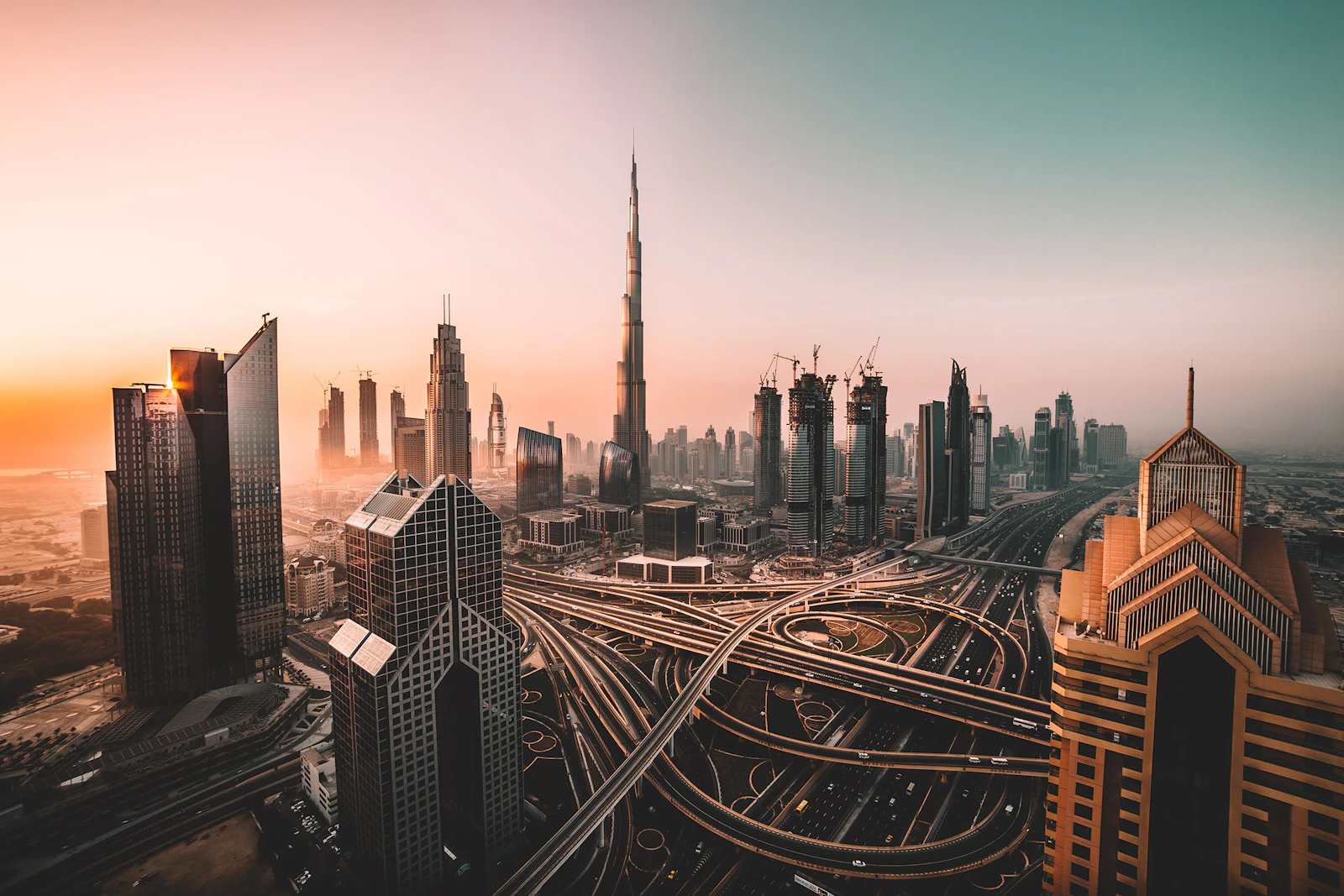
Ask a head of search in London or New York where the most interesting senior conversations are happening in 2026 and the answer is the same: Dubai. The city has crossed a threshold that very few financial centres ever reach — it is no longer a place where global leaders come on assignment, it is a place where global leaders choose to base their careers.
The data tells the story plainly. The DIFC has crossed 6,900 active companies and now hosts more than 46,000 professionals, with senior-level headcount growing faster than the overall base for four consecutive years. ADGM has tripled assets under management since 2021. Saudi-bound capital is increasingly routed through Dubai legal structures. And the share of CXO mandates we run for clients headquartered outside the UAE — but hiring into Dubai — has gone from 18% in 2022 to 41% in 2026.
Three policy moves did most of the work. The ten-year Golden Visa took the residency anxiety out of senior relocations. The corporate tax framework, set at a competitive 9% with generous free-zone treatment, gave CFOs and tax committees a clean answer to the question their global HQ was bound to ask. And the steady opening of family-office, fund-management and virtual-asset licences gave senior operators a real reason to be in the city, not just a tax reason.
Capital followed. Mubadala, ADQ, PIF and a quiet flotilla of single-family offices have built a buyer base that competes globally for assets — and therefore for the leaders who run those assets. A senior partner at a London firm can move to Dubai today and not feel they have stepped down a tier; in several sectors — sovereign-linked PE, climate infrastructure, sports rights, digital assets — they have stepped up one.
The cultural signals matter just as much as the policy ones. The city's hospitality, schooling and air connectivity have caught up with the ambition of the executive pipeline. A CFO can land from Mumbai on a Sunday evening, be at a board meeting in DIFC by 9 a.m. Monday, take a call with London in the afternoon and Singapore at night, and still make their child's swimming lesson. That is a sentence you cannot write about most global cities.
What does this mean for talent strategy? For Indian and South Asian leaders, Dubai is no longer a comp upgrade — it is a career upgrade. The roles available now span true regional P&L for North Africa, the Levant and South Asia. For European and American leaders, Dubai is increasingly the obvious post-pandemic alternative to London — closer to growth, lighter on tax, and structurally optimistic. For boards in Mumbai, Bengaluru and Delhi, it is a warning: the leaders you assumed would stay are now being courted from a six-hour flight away.
The next phase is already visible. Riyadh is building a parallel pull through Vision 2030, NEOM and the Public Investment Fund. Abu Dhabi is concentrating capital and AI infrastructure around G42 and ADQ. The Gulf is no longer a single market for senior talent; it is a three-way competition. Dubai's edge for the moment is liveability and depth of the existing community, but that edge is not permanent and the city knows it.
Our advice to senior candidates considering the move is unchanged from two years ago, only sharper. Do not optimise for the package. Optimise for the mandate, the chair, and the next move after this one. The leaders who have built the best careers out of Dubai in this cycle are the ones who treated the city as a launchpad, not a destination.

